Essential types of social media platforms for SMB success
Discover the essential types of social media platforms to boost your SMB's success. Make informed choices and maximize your impact!

Picking the wrong social media platforms doesn’t just waste your content budget — it quietly drains your team’s time, energy, and creative output. Many small and medium-sized businesses (SMBs) try to be everywhere at once, posting inconsistently across six or seven platforms while seeing minimal results on all of them. The smarter move is knowing which platform categories exist, what each one does best, and how to match them to your specific business goals. This guide breaks down every major platform type and gives you a clear framework for making the right call.
Table of Contents
- Core types of social media platforms
- Social networking platforms: Broad connection builders
- Visual and video platforms: Storytelling for higher impact
- Forums and messaging apps: Engagement and support
- How to choose and manage the best platforms for your business
- A smarter approach to managing multiple platforms
- Save time managing every platform with Status 200 Uploads
- Frequently asked questions
Key Takeaways
| Point | Details |
|---|---|
| Understand platform types | Each social media platform type offers unique strengths for SMB marketing strategy. |
| Prioritize 2-3 platforms | Focus your efforts on a handful of platforms best suited to your goals and resources. |
| Adapt content format | Tailor your posts to fit each platform’s content style for maximum engagement. |
| Use automation tools | Scheduling tools simplify the process of managing content across multiple accounts. |
| Measure and adjust regularly | Analyze your performance and adjust your strategy to keep improving results. |
Core types of social media platforms
Every platform you’re considering falls into one of five broad categories. Understanding these categories first makes the selection process far less overwhelming. Instead of comparing dozens of individual apps, you compare five distinct roles, then pick the best player for each role you actually need.

Here’s a quick breakdown of the five platform types:
| Platform type | Primary function | Best for SMBs |
|---|---|---|
| Social networking | Relationship building, feeds, groups | Community growth, brand awareness |
| Visual platforms | Image and short-form content | Product showcasing, storytelling |
| Video platforms | Long and short-form video | SEO, tutorials, brand engagement |
| Forums and communities | Niche discussions, Q&A | Market research, thought leadership |
| Messaging apps | Direct one-to-one or group messaging | Customer support, real-time service |
As HubSpot outlines, social networking suits broad relationship building through feeds and groups, visual platforms excel in storytelling through Reels and Stories, video drives engagement and SEO, forums support research and feedback, and messaging enables fast support.
Knowing these roles lets you streamline multi-platform posting without duplicating effort. You stop treating every platform identically and start tailoring your content to how each one actually works.
Social networking platforms: Broad connection builders
Social networking platforms are the backbone of most SMB strategies. These are the platforms built around feeds, profiles, groups, and community interactions. They give your brand a persistent presence where people can find you, follow you, and engage with your updates over time.
The three big players in this category are Facebook, LinkedIn, and X (formerly Twitter). Each serves a slightly different audience and tone.
- Facebook reaches the widest demographic range and supports robust group-based communities where loyal customers gather.
- LinkedIn is the go-to for B2B brands, professional services, and any business targeting decision-makers or career-focused audiences.
- X excels in real-time conversations, trending topics, and industries where quick commentary adds brand value (think media, tech, and finance).
The key to making social networking work is consistent, genuine engagement, not just broadcasting. SMBs that invest time in Facebook Groups or LinkedIn communities consistently see stronger customer loyalty than those who only post to their main feed and move on.
Your posting strategy on these platforms should mix three types of content: original brand updates, curated industry content that your audience finds useful, and direct engagement posts like polls or questions. This mix keeps your feed from feeling like an advertisement billboard.
Pro Tip: Review your engagement data every month and identify which post types generate the most comments, not just likes. Comments signal genuine interest and feed platform algorithms in your favor, boosting organic reach without spending a dollar on ads.
Executing platform-specific posting strategies on social networking sites means understanding that LinkedIn audiences respond to professional insights and data, while Facebook groups reward personal, community-driven content. Applying the same post to both without adjustment is a missed opportunity. Strong social media engagement strategies account for those nuances from the start.
Visual and video platforms: Storytelling for higher impact
If social networking platforms build relationships, visual and video platforms build desire. These are where people discover new brands, fall in love with products, and make purchasing decisions based purely on what they see.
Visual platforms excel in storytelling through formats like Reels, Stories, and carousels, while video platforms drive both brand engagement and long-term SEO visibility. The distinction matters because your content investment differs significantly between the two.
Here’s a direct comparison of the three most relevant platforms for SMBs:
| Feature | TikTok | YouTube | |
|---|---|---|---|
| Primary content format | Photos, Reels, Stories, carousels | Short-form vertical video | Long-form and short-form video |
| Audience demographic | 18-34, broad lifestyle interests | 16-34, trend-driven | All ages, intent-driven searches |
| SEO value | Low to moderate | Moderate | High (Google-indexed) |
| Best SMB use case | Product launches, brand aesthetic | Trend participation, authentic storytelling | Tutorials, reviews, brand authority |
| Organic reach potential | Moderate (algorithm-dependent) | High for new accounts | High with strong keyword strategy |
The visual content formats available today give even small teams serious storytelling power. Short Reels on Instagram can reach users who have never heard of your brand. A single well-produced TikTok explaining a product use case can generate thousands of views organically. YouTube videos, once published, continue driving search traffic for years.
Understanding video formats for marketers is increasingly non-negotiable. Aspect ratios, video length, captions, and thumbnail quality all affect how platforms distribute your content. A vertical 9:16 video performs very differently from a horizontal 16:9 cut, even when the content is identical.
Pro Tip: When you produce one short video for TikTok, repurpose it immediately for Instagram Reels and YouTube Shorts. Three platforms, one production effort. This approach multiplies your visibility without multiplying your workload — and it’s one of the fastest ways to stretch a small content budget.
Following content publishing best practices on visual and video platforms also means posting consistently rather than in bursts. Algorithms on Instagram and TikTok reward accounts that publish regularly, not accounts that disappear for three weeks and then post seven times in one day.
Forums and messaging apps: Engagement and support
Most SMBs treat forums and messaging apps as afterthoughts. That’s actually a competitive advantage for the ones who don’t.
Forums like Reddit and Quora are where your target customers go when they have real questions, frustrations, or curiosity about topics related to your industry. They’re not there to be sold to. They’re there to learn and discuss. That makes these platforms invaluable for market research, identifying content gaps, and understanding the exact language your customers use when describing their problems.
Messaging apps like WhatsApp Business, Facebook Messenger, and even Instagram DMs have become primary customer service channels. Customers increasingly expect fast, direct responses rather than email threads or phone queues.
As HubSpot notes, forums are built for research and feedback while messaging is built for real-time support. Here’s when to use each:
- Use forums when you want to research customer pain points before launching a new product or service.
- Use forums to participate in relevant niche communities and establish genuine thought leadership without overt promotion.
- Use messaging apps when a customer contacts you with a complaint, order issue, or time-sensitive question.
- Use messaging apps to run campaigns, share exclusive offers, or follow up after a purchase in a personal, conversational format.
“Forums for research and feedback; messaging for support.” This isn’t just a categorization tip — it’s a workflow principle. If you’re using messaging apps to broadcast promotions or using forums to push product links, you’re using both channels backward.
The brands that get this right use forums to listen before they speak, and they use messaging to respond before customers escalate. Both behaviors build trust faster than any ad campaign. Taking time to optimize social media reach means recognizing that reach isn’t just about followers — it’s about showing up in the right context at the right moment.
How to choose and manage the best platforms for your business
Now that you understand what each platform type does, the decision comes down to three core factors: where your audience actually spends time, what content format you can realistically produce, and what your business goal is for the next 90 days.
Here’s a selection checklist to run through before committing to any platform:
- Audience location: Where does your target customer already spend their time online? A B2B SaaS company targeting marketing directors belongs on LinkedIn. A home decor brand targeting young homeowners belongs on Instagram and Pinterest.
- Content capability: Do you have the team or tools to produce short video consistently? If not, starting on TikTok before building that muscle sets you up to fail. Match platform to production capacity.
- Business objective: Are you trying to generate leads, drive e-commerce sales, build brand awareness, or improve customer retention? Each goal maps to a different platform type more naturally than others.
- Competitor presence: Check where your competitors are active and, more importantly, where they’re getting real engagement. Presence and engagement are not the same thing.
- Platform growth trajectory: Some platforms are growing fast (TikTok, YouTube Shorts), while others have plateaued. Choosing a growing platform early gives you better organic reach before competition intensifies.
The proven management approach is to focus on 2 to 3 platforms maximum and adapt your content specifically for each one rather than posting identical content everywhere. This is counterintuitive for time-pressed SMB teams who assume posting to more platforms equals more reach. In practice, it usually equals more mediocrity spread thin.
Pro Tip: Use automation tools to schedule and cross-post content across your chosen platforms, but always review each post before it goes live to catch any format or tone mismatches. Automation handles the scheduling; your judgment handles the quality.
Learning how to handle multi-platform engagement and mastering scheduling social media posts are the two operational skills that separate consistent brands from sporadic ones.
A smarter approach to managing multiple platforms
Here’s an uncomfortable truth most social media advice skips over: being on the “biggest” platform is not the same as being on the right platform for your business.
We see SMBs chase Facebook because it has three billion users, or rush to TikTok because it’s trending, without ever asking whether those users match their customer profile. The result is beautifully crafted content that performs terribly, followed by the false conclusion that “social media doesn’t work for our industry.”
The real lesson, earned by watching hundreds of brands iterate their strategies, is this: fit beats size, every single time. A LinkedIn post reaching 800 highly relevant professionals will generate more pipeline than a Facebook post reaching 8,000 loosely targeted users. A niche Reddit thread with 50 engaged readers can surface more genuine product feedback than a broad Instagram Story seen by 5,000 passive scrollers.
The proven management advice to focus on 2 to 3 platforms and adapt content specifically for each type isn’t just a productivity tip. It’s a compounding strategy. When you go deep on fewer platforms, you build genuine audience relationships, accumulate algorithmic credibility, and develop real content expertise. All three of those assets are harder for competitors to copy than simply posting more often.
The brands we see winning in 2026 are not the ones posting daily to seven platforms. They’re the ones posting thoughtfully to three, using posting times automation to stay consistent without burning out their teams, and treating each platform as a distinct channel with its own voice and format expectations.
Focus is not a limitation. For SMBs specifically, it’s the actual strategy.
Save time managing every platform with Status 200 Uploads
Understanding platform types is only half the equation — executing consistently across even two or three platforms takes real operational discipline. That’s where having the right tool makes an enormous difference for SMB teams that don’t have a dedicated social media department.
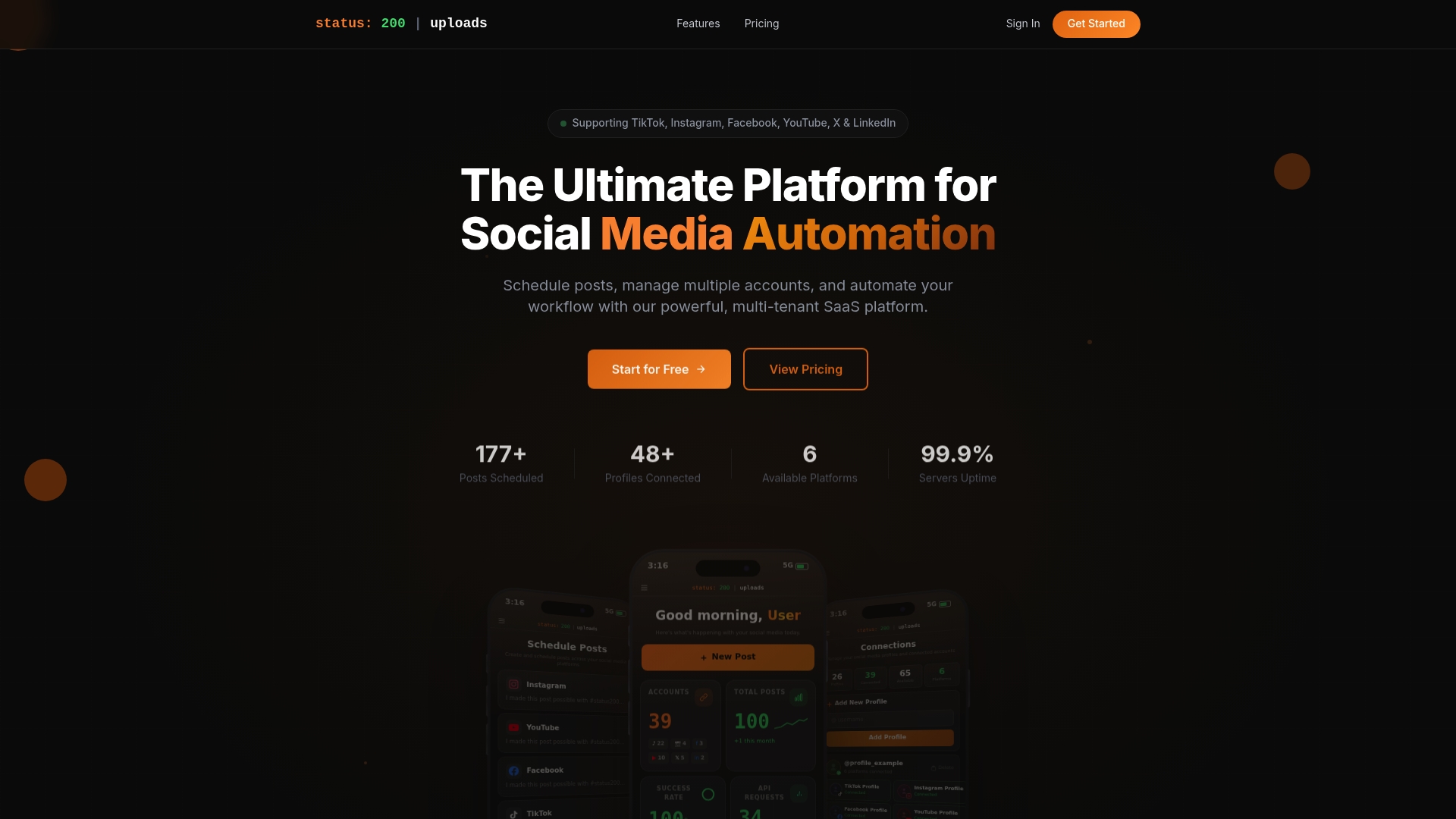
Status 200 Uploads gives you a single dashboard to connect, schedule, and publish to TikTok, Instagram, Facebook, YouTube, X, and LinkedIn simultaneously. You can set platform-specific post settings, attach rich media, and manage all your accounts without switching between apps. If you’re evaluating your options, the Status 200 Uploads vs Publer comparison gives you a clear side-by-side look at what sets each tool apart. For SMBs that need efficiency without sacrificing content quality, it’s worth a close look.
Frequently asked questions
What are the main types of social media platforms for marketers?
The five main types are social networking, visual, video, forums, and messaging platforms — each supports a distinct marketing goal from brand building to customer support.
How many platforms should an SMB focus on?
Most experts recommend focusing on 2 to 3 platforms to maximize ROI without spreading your team’s efforts too thin across channels.
Which platforms are best for customer support?
Messaging apps like WhatsApp and Facebook Messenger are best for fast, direct service because they support real-time support conversations at the moment customers need help.
How do I choose platforms for my content type?
Match your format to platform strengths: use carousels and visuals for Instagram or LinkedIn, and short video for TikTok or YouTube Shorts, based on what your team can produce consistently.
Can I automate posting to all platforms at once?
Yes, social media scheduling tools like Status 200 Uploads let you automate and customize posts for each platform simultaneously, saving significant time without sacrificing content relevance.
Recommended
- Status 200 Uploads — Schedule Posts to TikTok, Instagram, FB, YouTube, X & LinkedIn
- Status 200 Uploads — Schedule Posts to All Socials
- Status 200 Uploads — Schedule Posts to All Socials
- Status 200 Uploads — Schedule Posts to All Socials
- 10 Best Social Media Management Tools for Small Business - Fylde Digital - Web Design SEO Social Media