Social media engagement: Strategies for growth and results
Learn what social media engagement really means, why it matters for SMBs, and how to measure and improve it with strategies that drive real business results.

Most social media managers track impressions like a scoreboard, celebrating big numbers while wondering why sales stay flat. The truth is that visibility and engagement are two different games, and confusing them is one of the most common and costly mistakes in digital marketing. Real engagement is not a like count or a follower milestone. It is the quality of attention your content earns, the conversations it starts, and the actions it drives. This guide breaks down exactly what social media engagement is, why it matters for growing businesses, and how to measure and improve it with strategies that actually work.
Table of Contents
- Understanding social media engagement
- Why engagement matters for small and medium businesses
- Top strategies to improve social media engagement
- Risks and myths: Avoiding shallow engagement tactics
- Measuring and optimizing your engagement
- Why measuring real engagement beats vanity metrics
- Accelerate your engagement with the right tools
- Frequently asked questions
Key Takeaways
| Point | Details |
|---|---|
| Engagement vs. impressions | Real engagement focuses on meaningful actions like comments, shares, and DMs, not just on content views. |
| Avoid engagement bait | Gimmicks that ask for likes or shares artificially boost numbers but harm your credibility and algorithm reach. |
| Community drives results | Small and medium businesses thrive by building authentic connections, which lead to brand loyalty and growth. |
| Measure what matters | Track engagement rates and quality of interaction, not only the number of followers or reach. |
| Optimize with tools | Use social media management tools to consistently improve and analyze your engagement. |
Understanding social media engagement
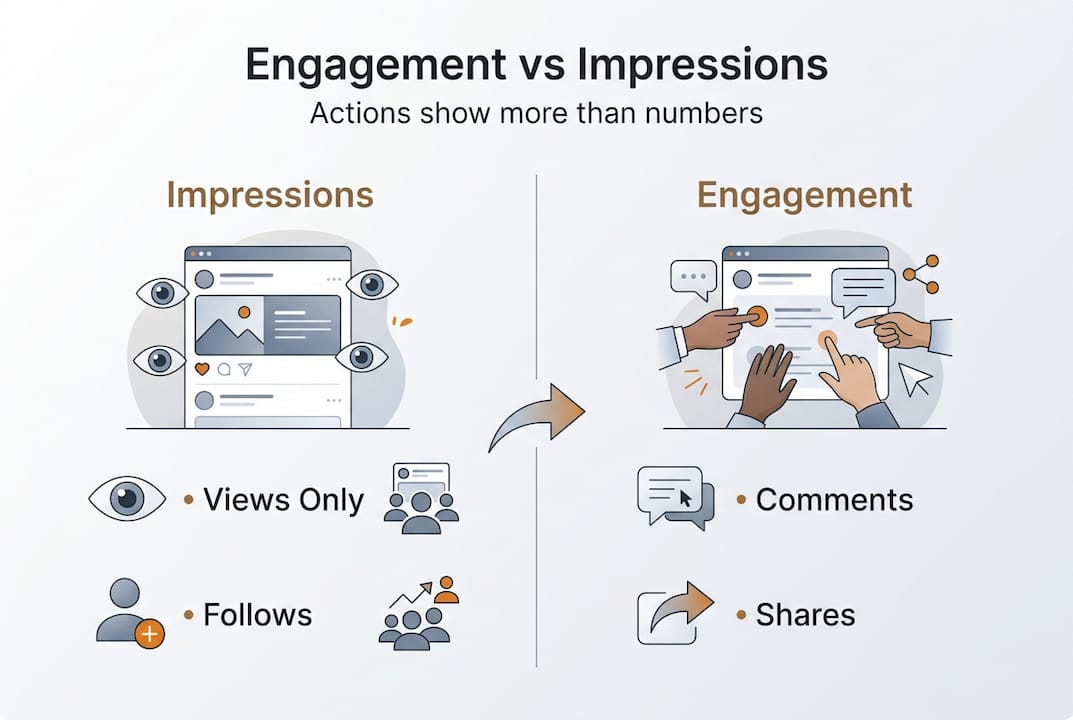
Social media engagement is any meaningful action a person takes in response to your content. That includes likes, comments, shares, saves, direct messages, and even link clicks. Think of it as the difference between someone walking past your store window and someone walking in to browse. Impressions count the window walkers. Engagement counts the people who come inside.
Here is a quick breakdown of the main engagement actions and what they signal:
- Likes: Low-effort acknowledgment, but useful for measuring broad appeal
- Comments: Higher intent; shows the content sparked a real reaction
- Shares: Strong signal of genuine resonance; grows organic reach authentically
- Saves: Tells you the content has lasting utility or reference value
- DMs: Highest-intent action; often a direct path to conversion or loyalty
These actions are very different from reach, impressions, or follower count. Reach tells you how many unique accounts saw your post. Impressions count total views, including repeat views by the same person. Followers reflect past interest, not current attention. None of these guarantee that anyone cared enough to interact.
The gap between those numbers is where the real insight lives. High impressions with low engagement often signal content that is not resonating with its audience. You might be reaching thousands of people, but if nobody comments, shares, or saves, the algorithm and your potential customers both move on fast.
| Metric | What it measures | What it tells you |
|---|---|---|
| Impressions | Total views | How often content was shown |
| Reach | Unique accounts | How wide your distribution is |
| Engagement | Active interactions | Whether content sparked a reaction |
| Followers | Account subscribers | Potential audience size |
Quality beats quantity here every time. A post with 200 comments from real customers is worth more than a post with 20,000 impressions and zero replies. If you are scheduling social media posts without thinking about what happens after the post goes live, you are missing half the equation.
“Consistent posting helps maintain visibility, but content quality is what determines whether people actually engage.” Scheduling keeps you in the game; what you say decides whether you win.
Why engagement matters for small and medium businesses
For small and medium businesses, social media engagement is not a nice-to-have. It is a direct line to trust, loyalty, and word-of-mouth growth. When someone comments on your post, shares your reel, or replies to your story, they are telling their own network that your brand is worth paying attention to.
Engagement drives three business outcomes that matter most for SMBs:
- Algorithm visibility: Platforms reward content that gets interactions by showing it to more people organically. More engagement means wider reach without paying for ads.
- Brand trust: Active, two-way conversations signal that a real business is behind the account, not just a broadcast machine.
- Customer retention and referrals: Engaged followers are far more likely to become repeat buyers and to recommend your brand to others.
As research confirms, SMBs succeed best when they build real community rather than just broadcasting. The brands that treat social media like a megaphone tend to get tuned out. The ones that treat it like a neighborhood conversation tend to grow.
Here is a simple illustration of why this matters. Two local fitness studios each run the same Instagram campaign with similar impressions of around 15,000 per week. Studio A posts polished graphics and never replies to comments. Studio B posts behind-the-scenes content, responds to every comment, and asks questions in captions. Studio B drives three times the website visits and books significantly more trial classes. Same reach, very different results.

| Engagement rate | Typical outcome for SMBs |
|---|---|
| Under 1% | Low brand recall, poor organic growth |
| 1% to 3% | Moderate visibility, growing trust |
| 3% to 6% | Strong community signal, good conversion potential |
| Over 6% | High-loyalty audience, strong referral engine |
Vanity metrics like total follower count or raw impression numbers do not move your KPIs. Only improving content outreach through genuine audience interaction translates into business results you can measure.
Top strategies to improve social media engagement
Knowing why engagement matters, here is how you can start improving it.
Consistent posting amplifies reach, but lasting engagement depends on content quality. That is your foundation. From there, layer in these five proven tactics:
- Ask direct questions in your captions. Questions invite responses. “What is your biggest challenge with X?” gets far more replies than a statement about X.
- Reply to every comment, especially early. The first 30 to 60 minutes after posting are critical. Platforms interpret early interactions as signals to push content further.
- Use polls, quizzes, and interactive stickers. Instagram Stories and LinkedIn polls are low-friction ways to get audiences involved without requiring them to type.
- Feature user-generated content (UGC). When you reshare a customer’s post or testimonial, you reward the behavior and signal to others that participation matters.
- Go live and use Stories regularly. Live video and Stories create urgency and intimacy that feed-based content rarely achieves. They also surface your account to followers who may have missed your recent posts.
Pro Tip: When reviewing your analytics, filter by engagement metrics first, not reach. If a post underperformed on reach but drove strong comments and shares, that is a content winner worth replicating.
For quick wins, keep these in mind:
- Post when your audience is most active, usually mornings and early evenings on weekdays
- Use strong, specific calls to action like “Save this for later” or “Tag someone who needs to hear this”
- Maintain visual consistency so your content is instantly recognizable in a crowded feed
You can use free content scheduling tools to plan posts at peak times without needing to be online manually. Pairing good storytelling tactics with a reliable streamlined content calendar keeps both quality and consistency high.
One caution: avoid engagement bait. Phrases like “Like if you agree” or “Comment YES if you want this” feel cheap, they often violate platform policies, and they attract low-value interactions that distort your data.
Risks and myths: Avoiding shallow engagement tactics
While there are smart strategies, some tactics can backfire badly. Here is what to avoid.
Engagement bait refers to content designed to trigger interactions through manipulation rather than genuine interest. Think forced polls, irrelevant contests, or baited questions with no real context. It is tempting because the numbers pop immediately. But those numbers lie.
The negative effects of engagement bait include:
- Wrong audience attraction: People who interact with bait rarely become customers. They inflate your metrics while diluting your targeting data.
- Credibility damage: Savvy followers spot bait quickly. It signals desperation and undercuts your brand’s authority.
- Organic reach penalties: Platforms like Facebook and X have algorithm filters that detect engagement bait and suppress the reach of accounts that rely on it. Short-term spikes lead to long-term visibility losses.
Pro Tip: Set up a simple alert or weekly check for sudden engagement spikes. If a post suddenly sees ten times its normal comment volume, check the quality of those comments. Mostly one-word replies or emoji responses often indicate bait-driven traffic, not genuine interest.
“Engagement bait can cause algorithmic penalties and results in hollow metrics that make your data untrustworthy and your targeting less effective.”
Some marketers also believe that story-driven content is only for big brands with video budgets. That is a myth. A straightforward text post that tells a relatable customer story will consistently outperform a polished graphic with a generic caption. Earned engagement, the kind that comes from content your audience actually values, is the only kind worth building on. If you are curious how different platforms stack up for genuine community building, a Sprout Social comparison shows how tool choices affect your ability to track and act on real engagement signals.
Measuring and optimizing your engagement
After avoiding the pitfalls, focus on continuous improvement by tracking the right metrics.
The best engagement metrics to monitor regularly are:
- Engagement rate: Total interactions divided by reach or followers, expressed as a percentage
- Share rate: How often your content gets amplified by others
- Meaningful comments: Replies that include sentences, questions, or personal stories, not just emojis
- Direct messages: Volume and quality of inbound DMs related to content
Here is a simple four-step process to review and improve engagement consistently:
- Track: Pull platform analytics weekly. Focus on which posts earned the most meaningful interactions.
- Analyze: Look for patterns in format, topic, time of posting, and caption style that correlate with high engagement.
- Test: Run A/B experiments. Change one variable at a time, such as caption length or content format, and measure the difference.
- Adjust: Shift your content mix toward what the data confirms is working. Drop what is not, regardless of how much effort went into it.
Consistent and meaningful interactions are a leading indicator of SMB success online. Platforms reward active communities, and your competitors are likely not optimizing at this level yet.
Benchmarking is also worth doing quarterly. Look at the engagement rates of three to five competitors in your niche. If they are consistently outperforming you, study what content formats and topics they use most. Use this as inspiration, not imitation. For tracking engagement over time, a scheduling and analytics tool that aggregates data across platforms saves hours each week compared to checking each network manually.
| Action | What to measure | How often |
|---|---|---|
| Review top posts | Engagement rate, shares, comments | Weekly |
| Competitor benchmarking | Industry engagement averages | Quarterly |
| A/B content testing | Format, caption, timing | Monthly |
| DM and reply audit | Response rate, conversation depth | Weekly |
Why measuring real engagement beats vanity metrics
Here is something most marketing playbooks get wrong: they still treat follower growth and impression counts as success signals. We see this pattern constantly. A brand hits 10,000 followers and celebrates while its comment section sits silent and its DMs are empty. That is not growth. That is an audience that has opted out.
The brands that outpace even larger competitors are almost always the ones building tight, engaged communities rather than chasing broad visibility. A business with 1,200 genuinely engaged followers who ask questions, share posts, and buy consistently will outperform a brand with 50,000 passive scrollers every single time. The numbers are not even close.
Most brands waste real budget trying to win the algorithm with surface-level tactics, more posts, flashier graphics, trending audio, because it feels productive. But the algorithm is a reflection of your audience. If your audience is not responding, no posting frequency will fix that.
The shift worth making is to treat comments, shares, and DMs as your primary business signals. Not likes. Not impressions. When someone DMs you after seeing a post, that is a lead. When someone shares your content unprompted, that is earned media. If you want to see how the right platform supports this shift, a comparison with enterprise tools shows what features actually matter for SMBs focused on quality engagement.
Accelerate your engagement with the right tools
Ready to put these insights into action? Here is how Status 200 Uploads can help.
Status 200 Uploads is built specifically for social media managers and growing businesses who want to turn consistent publishing into real audience engagement. You can manage TikTok, Instagram, Facebook, YouTube, X, and LinkedIn from one dashboard, schedule content at peak times, and track how each post performs across platforms without juggling multiple tabs.
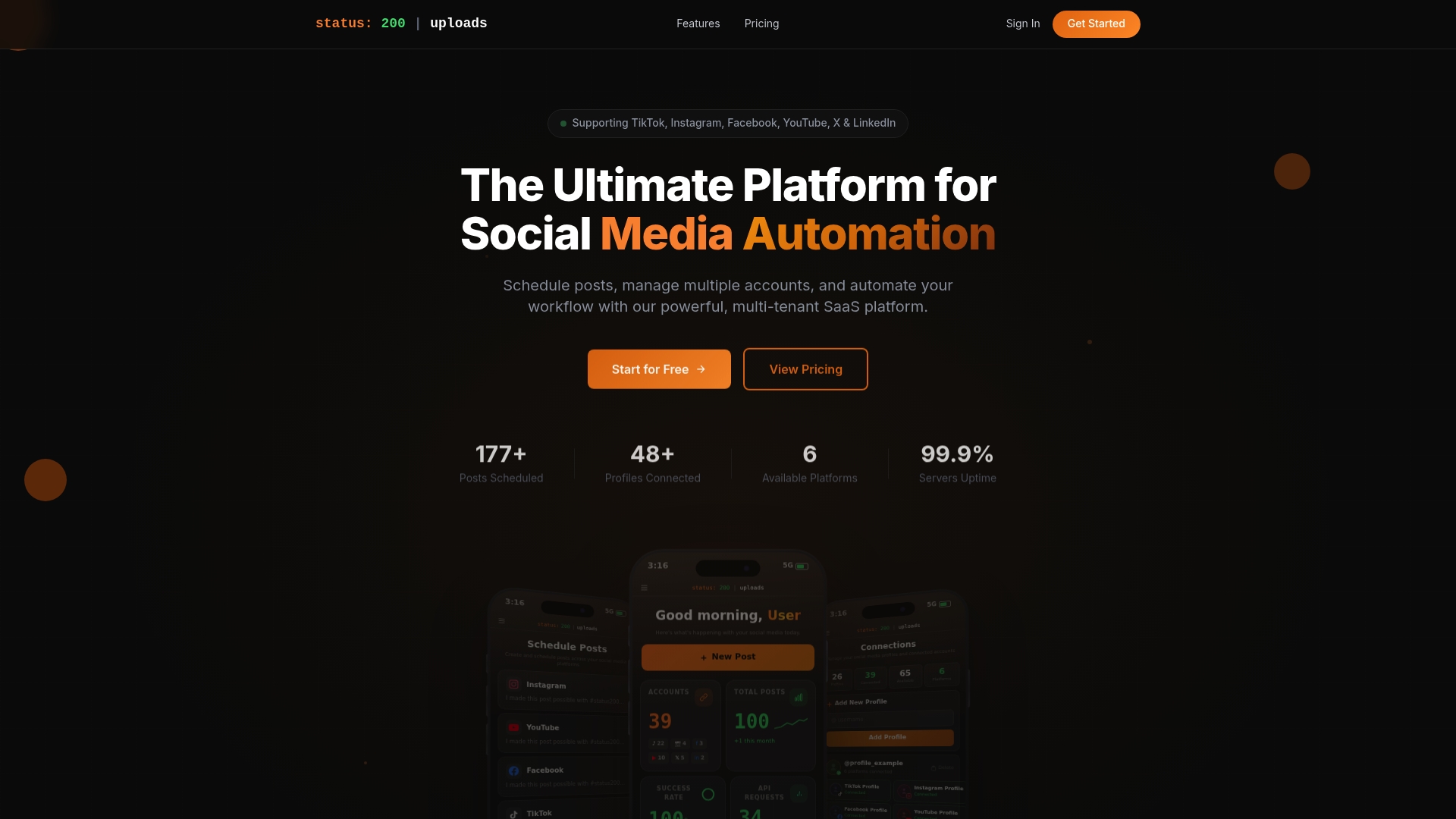
With automation via Zapier and Make.com, detailed post tracking, and media organization tools, you spend less time on logistics and more time on the content and conversations that actually build community. Check out the free scheduler pricing to start, or explore how it stacks up as a Buffer alternative if you are already using another tool and want something more efficient.
Frequently asked questions
What is considered good social media engagement?
Good engagement depends on your platform and audience size, but it generally means active likes, comments, shares, and DMs relative to your follower count. The quality of interactions reveals how much your content resonates, not just how many people saw it.
How do I increase engagement without using engagement bait?
Focus on authentic conversations, ask meaningful questions, and use interactive features like polls and quizzes. Engagement bait leads to hollow metrics and can trigger algorithmic penalties that hurt your reach long-term.
Does posting more often always increase engagement?
Not automatically. Consistent posting maintains visibility, but content quality and audience relevance are the primary drivers of real engagement gains over time.
What metrics should I track to measure engagement effectively?
Track your engagement rate, share rate, quality of comments, and direct message volume. Conversation depth matters more than raw interaction counts when evaluating whether your content is truly connecting.
Recommended
- Status 200 Uploads — Schedule Posts to TikTok, Instagram, FB, YouTube, X & LinkedIn
- Status 200 Uploads vs Sprout Social — 2026 Comparison
- Blog — Status 200 Uploads
- Status 200 Uploads vs Hootsuite — 2026 Comparison
- Boost Instagram Engagement for Ethical Brands – Marzipan
- Social Media Manager – AMB Moving Services