How to optimize social media reach: proven strategies
Learn proven strategies to boost your social media reach in 2026. Discover how timing, content planning, analytics, and the right tools drive real growth.

You’re posting consistently, your captions are solid, and your visuals look great. Yet the numbers barely budge. For social media managers and business owners, few things are more frustrating than putting in real effort and seeing content disappear into the feed. The truth is, posting more doesn’t automatically mean reaching more people. Reach is a distinct metric that responds to specific decisions: timing, platform fit, content format, and distribution strategy. This guide breaks down exactly how to grow your social media reach with practical steps, proven tactics, and the tools that make it sustainable.
Table of Contents
- Understanding social media reach and its impact
- Preparing your content and strategy for maximum reach
- Step-by-step: How to optimize distribution and posting
- Measuring, analyzing, and refining your reach strategy
- Why consistency and curiosity win at social media optimization
- Schedule smarter and amplify your reach with Status 200 Uploads
- Frequently asked questions
Key Takeaways
| Point | Details |
|---|---|
| Reach drives growth | Expanding your reach is essential for building brand awareness and community. |
| Tailor content by platform | Adapting content for each platform maximizes its visibility and engagement. |
| Smart scheduling matters | Posting at optimal times and using scheduling tools boosts your reach efficiently. |
| Continuous analysis wins | Regularly reviewing analytics helps you refine and improve your strategies over time. |
Understanding social media reach and its impact
Before you can improve reach, you need to know what you’re actually measuring. Social media reach is the total number of unique users who see your content. That’s it. One person, one count, regardless of how many times they see the same post.
This is different from impressions, which count every single view, including repeat views from the same person. And it’s different from engagement, which measures interactions like likes, comments, and shares. Reach tells you how wide your net is. Engagement tells you how effective that net is. You need both, but reach comes first.
Low reach creates a compounding problem. When fewer unique people see your content, your engagement rate drops, your algorithm signals weaken, and your brand awareness stalls. Over time, this limits your ability to grow your audience, generate leads, or convert followers into customers.
Here’s a quick benchmark comparison across major platforms:
| Platform | Avg. organic reach (% of followers) | Best content format |
|---|---|---|
| 5%–10% | Reels, carousels | |
| 2%–6% | Video, native posts | |
| TikTok | 20%–50% | Short-form video |
| 10%–20% | Long-form, polls | |
| YouTube | Variable | Long-form video |
Several factors directly influence how far your content travels:
- Posting time: Reaching users when they’re actually online makes a measurable difference. Optimizing post timing is one of the fastest wins available.
- Content type: Video consistently outperforms static images on most platforms.
- Engagement velocity: Posts that get fast early engagement are rewarded by algorithms.
- Platform-specific signals: Each platform weighs different actions differently.
- Account authority: Older, more active accounts tend to get broader initial distribution.
Note: Don’t confuse follower count with reach. A large following means nothing if your content publishing best practices aren’t aligned with what the algorithm rewards. Brands with 10,000 followers can regularly outreach competitors with 100,000 if their content strategy is tighter.
Preparing your content and strategy for maximum reach
Now that you know what reach truly means, it’s time to build a strategy that makes the most of your audience and chosen platforms.
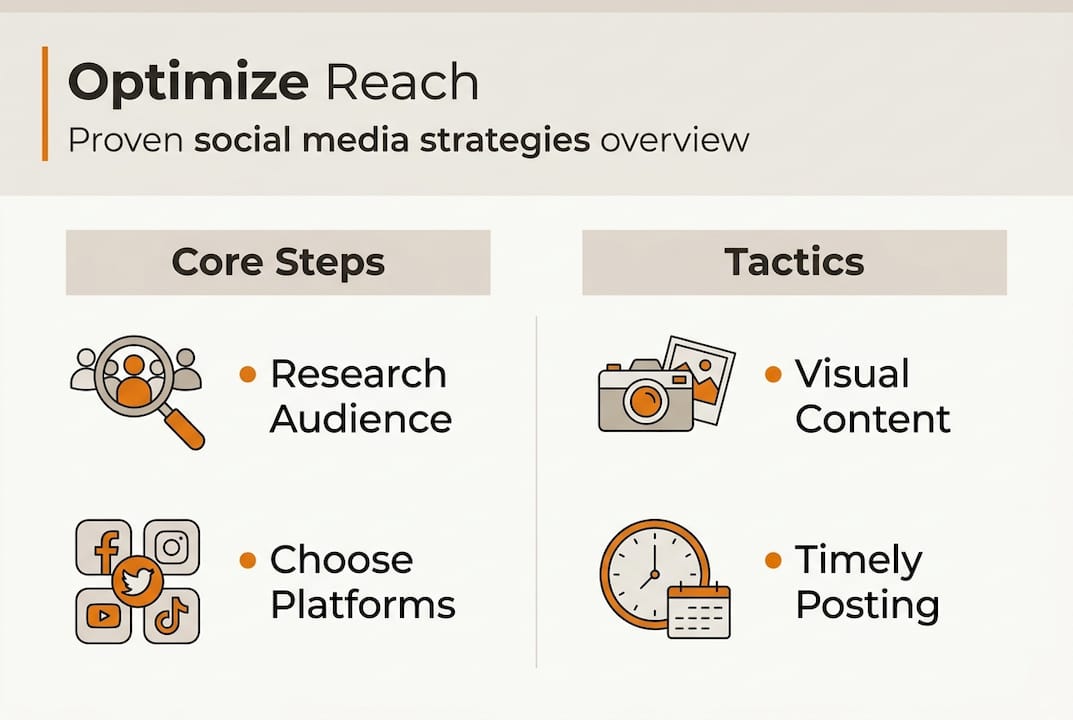
The first step is audience research. You need to know when your audience is active, what format they prefer, and which platforms they actually use. Platform analytics (Instagram Insights, LinkedIn Analytics, TikTok Analytics) give you this data directly. Most platforms show peak activity windows by day and hour. Start there.

Next, choose your platforms deliberately. Spreading thin across six platforms without enough resources to post quality content on each is a common mistake. Pick two or three platforms where your audience is most concentrated and commit to those first.
Here’s a comparison of platform content types and their reach potential:
| Platform | Top content type | Reach potential | Best audience |
|---|---|---|---|
| TikTok | Short video | Very high | Gen Z, Millennials |
| Reels, carousels | High | Millennials, Gen Z | |
| Articles, polls | Medium-High | Professionals, B2B | |
| Video, groups | Medium | 30–55 age range | |
| YouTube | Long-form video | High | Broad, all ages |
Content tailored to audience preferences receives higher reach because platforms reward content that keeps users engaged. This means format matters as much as message.
To plan content that works across multiple platforms, follow these steps:
- Audit your current top performers: Look at which posts drove the most reach in the past 90 days.
- Identify patterns: Note the format, topic, and posting time of those posts.
- Build a content calendar: Plan at least two weeks ahead, with platform-specific variations.
- Adapt content by platform: A LinkedIn post is not the same as a TikTok caption. Tailor each one.
- Incorporate storytelling: Posts that open with a relatable scenario or tension earn more attention and shares.
Visuals and video are non-negotiable in 2026. Even on text-heavy platforms like LinkedIn, posts with images or short clips consistently outperform plain text. Check out platform-specific posting strategies to understand the nuances for each channel.
Pro Tip: Use platform analytics to sort your posts by reach, not just likes. The content that spreads farthest is not always the content that gets the most comments. Learn the difference and produce more of what actually travels.
Step-by-step: How to optimize distribution and posting
With a solid strategy in place, let’s get into executing your plan and streamlining posting for the widest possible reach.
Consistency is the baseline. Algorithms favor accounts that post regularly because they signal reliability to users. But consistency without quality is wasted effort. Aim for a cadence you can sustain with strong content, not one that burns you out with mediocre posts.
Scheduling posts at optimal times increases reach by aligning with audience activity. Most platforms show you when your followers are most active. Use that data instead of guessing.
Here’s a step-by-step workflow to optimize your distribution:
- Audit your best posting windows: Pull last month’s analytics and note when your top-reaching posts went live.
- Set a weekly schedule: Block out posting slots that align with peak activity for each platform.
- Batch-create content: Produce a week’s worth of posts in one session to keep quality consistent.
- Use a scheduling tool: Queue posts in advance so you never miss a window. Learn how multi-platform posting tips can simplify this.
- Customize per platform: Even when cross-posting, adjust captions, hashtags, and formats. Cookie-cutter reposts underperform.
- Publish and monitor: Track early engagement signals. A post that gets strong traction in the first hour often gets pushed to more feeds.
- Review and revise weekly: Identify what hit and what flopped, then adjust next week’s plan accordingly.
When it comes to manual versus automated posting, automation wins on efficiency but only if you pair it with personalized, platform-specific content. Automation doesn’t mean identical content everywhere.
Pro Tip: Run a 30-day test where you post at two different time slots for the same type of content. Compare reach numbers. You’ll often find a clear winner that you can lock in going forward.
Measuring, analyzing, and refining your reach strategy
Once your posting is optimized, you need to monitor and tune your strategy so your reach keeps improving over time.
Regular analysis of reach and engagement data allows you to refine strategies for better results. Without this step, you’re flying blind. Analytics transform guesswork into decisions.
The metrics that matter most for reach optimization:
- Organic reach: How many unique users saw your post without paid promotion.
- Engagement rate: Interactions divided by reach. A high rate signals quality content.
- Shares and saves: These amplify reach beyond your existing audience.
- Click-through rate (CTR): Shows whether reach is translating into real interest.
- Follower growth rate: Sustained reach gains often drive new followers over time.
Here’s a reference table for tracking reach across platforms:
| Metric | Where to find it | What it tells you |
|---|---|---|
| Organic reach | Platform insights | How wide your content traveled |
| Engagement rate | Native analytics | How well content resonated |
| Shares | Post-level data | Amplification potential |
| Link clicks | UTM tracking | Traffic driven to your site |
| Impressions | Platform dashboards | Total views including repeats |
Tools that make tracking easier:
- Native dashboards: Instagram Insights, LinkedIn Analytics, TikTok Analytics
- Third-party platforms: Status 200 Uploads, Sprout Social, Later
- UTM parameters with Google Analytics for tracking off-platform traffic
- Engagement strategies analysis built into your content review cycle
When data shows a dip in reach, check three things first: posting time, content format, and engagement velocity in the first hour. Often, a small adjustment in one of those areas creates noticeable improvement.
Pro Tip: Set a monthly reach goal, such as a 10% increase in average organic reach per post. Review progress every four weeks and tie any strategy changes directly to what the data shows. Goals without deadlines don’t move teams to act.
Why consistency and curiosity win at social media optimization
Most brands that struggle with reach aren’t short on tools or budget. They’re short on curiosity. They find a format that works, repeat it until it stops working, and then wonder why reach dropped. The brands that consistently grow their reach treat social media like an ongoing experiment, not a production line.
The uncomfortable truth is that consistency in posting is not enough on its own. You can post every day at the perfect time and still plateau. What keeps reach growing is curiosity: testing new formats, paying attention to emerging platform features, and being willing to scrap a tactic the moment data says it’s not working.
One-size-fits-all playbooks are the enemy of sustained reach. What works on TikTok in Q1 may not work in Q3. What drives reach on LinkedIn for a B2B brand won’t translate directly to Instagram for a consumer product. Customization, driven by real audience data, always wins over generic best practices.
If you want to build long-term reach, pair consistent execution with a genuine appetite for learning. Use content publishing insights to challenge your assumptions regularly. The brands that treat every post as a data point, not just a deliverable, are the ones that compound their reach over time.
Schedule smarter and amplify your reach with Status 200 Uploads
Putting all of this into practice gets a lot easier with the right platform behind you.
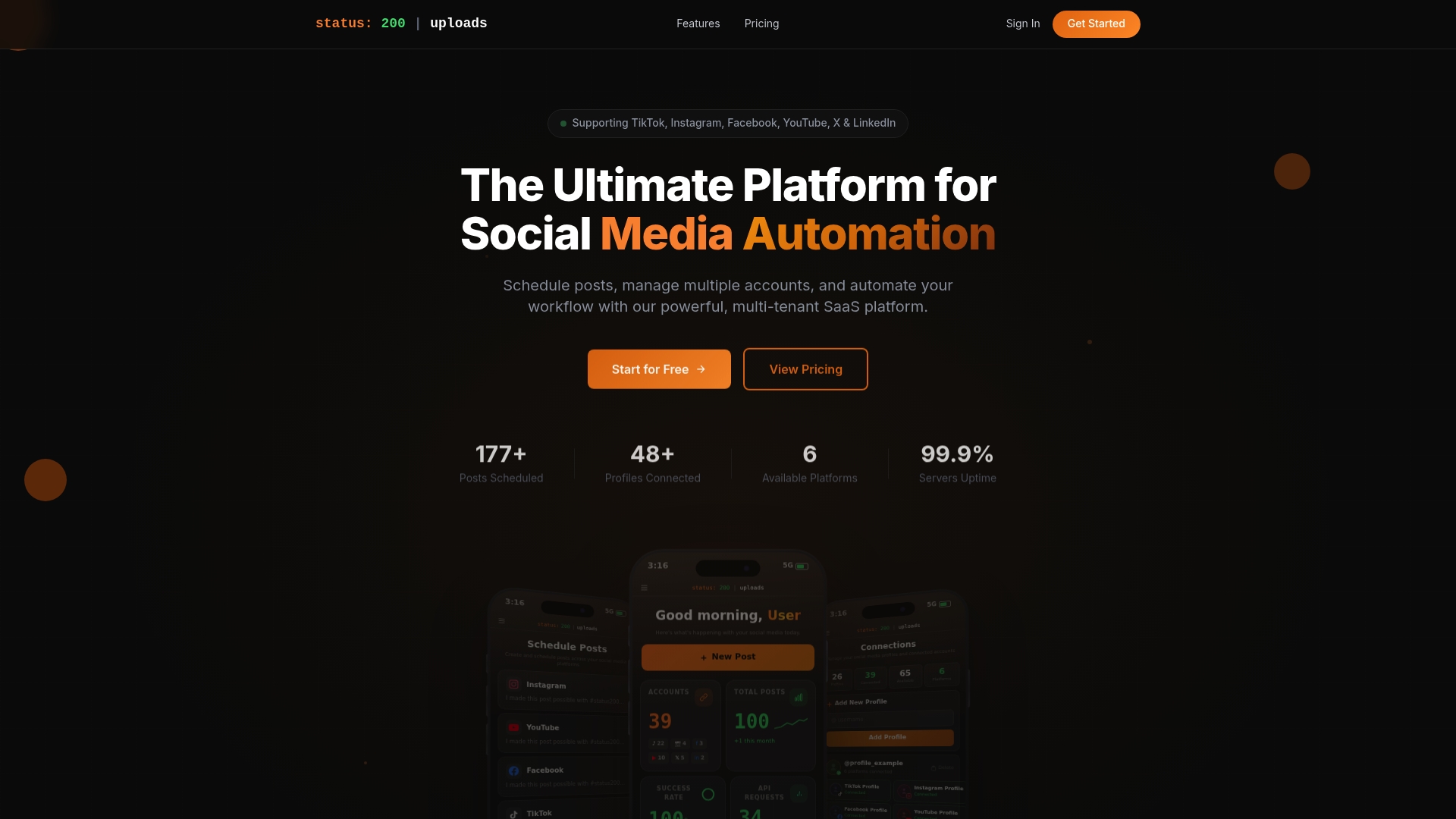
Status 200 Uploads is built for exactly this kind of work. It lets you connect TikTok, Instagram, Facebook, YouTube, X, and LinkedIn in one dashboard, schedule posts at optimal times, and customize content per platform without juggling multiple tools. You get detailed post tracking to see what’s driving reach, plus automation integrations with Zapier and Make.com for hands-off workflows. Whether you’re managing one brand or several, it’s designed to save you time while expanding your reach. Check out the free scheduler pricing and see how it fits your workflow.
Frequently asked questions
What is the difference between reach and impressions on social media?
Reach counts unique users who see your content, while impressions include every view, even multiple views from the same person. Reach measures audience size; impressions measure exposure volume.
How often should I post on social media to maximize reach?
Most brands see stronger results with at least 3 to 5 quality posts per week, though the right frequency depends on your audience and platform. Posting at regular intervals signals consistency to algorithms and keeps your content in rotation.
Which tools help optimize social media posting and analysis?
Status 200 Uploads, along with native platform dashboards, covers both scheduling and tracking in one place. Scheduling and analytics tools take the guesswork out of when to post and what to improve.
How do I know if my social media strategy is working?
Track reach, engagement, shares, and link clicks month over month. Tracking engagement and reach over time shows whether your strategy is gaining or losing ground, and where to adjust.