10 best practices for content publishing to boost engagement
Discover 10 proven content publishing best practices to boost engagement, optimize timing, and streamline your social media strategy for SMBs.

Figuring out when to post, what to share, and how often to show up is one of the most frustrating parts of running social media for a small or medium-sized business. You can spend hours creating content, only to watch it land with a thud because the timing was off or the strategy was vague. The good news is that proven best practices and real benchmark data cut through that guesswork. This guide walks you through ten actionable strategies, from building a goal-driven plan to using analytics for continuous improvement, so you can publish smarter, not harder.
Table of Contents
- Start with a goal-driven strategy
- Optimize timing and publishing frequency
- Prioritize quality over quantity
- Leverage analytics and iteration for continuous improvement
- Why algorithm advice can backfire: What actually works for SMBs
- Streamline content publishing with the right scheduling tools
- Frequently asked questions
Key Takeaways
| Point | Details |
|---|---|
| Strategy first | Define business-aligned goals and focus on 1-3 key platforms for stronger results. |
| Timing matters | Post midweek during business hours for optimal engagement, but always analyze your own data. |
| Quality over quantity | Prioritize well-crafted content instead of posting excessively to drive sustained engagement. |
| Measure and adapt | Use analytics to continuously refine your publishing strategy and maximize results. |
Start with a goal-driven strategy
Before you write a single caption or schedule a single post, you need a strategy that ties directly to what your business actually wants to achieve. Without that anchor, you end up posting randomly and hoping something sticks. That is not a plan. That is a wish.
Here is a practical way to build your strategy from the ground up:
- Define SMART goals. SMART stands for Specific, Measurable, Achievable, Relevant, and Time-bound. Instead of “grow our audience,” try “increase Instagram followers by 15% in 90 days.” That kind of clarity shapes every decision that follows.
- Audit your current channels. Look at which platforms are already working for you. Check follower counts, engagement rates, and traffic data. You may find that LinkedIn drives more leads than Facebook, or that TikTok gets views but no conversions.
- Research your audience. Know who you are talking to before you decide where to talk. Age, location, job title, and online behavior all influence which platforms your audience actually uses.
- Study your competitors. Look at what content is performing well in your space. Gaps in their strategy are your opportunity. If they ignore video, that could be your edge.
- Focus on 1 to 3 platforms. Spreading yourself across six platforms with a small team leads to mediocre content everywhere. According to Social Media Marketing Strategy, SMBs should define SMART goals tied to business outcomes like awareness or leads, then concentrate effort where it counts.
Once your strategy is set, revisit it every quarter. Audience behavior shifts, algorithms change, and your business priorities evolve. Staying current with audience analytics strategies helps you catch those shifts before they hurt your performance.
Pro Tip: Block 30 minutes each month to review your top-performing posts. Look for patterns in format, topic, and timing. Those patterns are your strategy updating itself in real time.
Optimize timing and publishing frequency
With a clear strategy in hand, optimizing when you publish is the next lever for maximizing reach. Even great content gets buried if it goes live when your audience is offline.

Research consistently points to midweek windows as the sweet spot. Midweek posting (Tue-Thu) between 9am and 5pm tends to generate the strongest visibility across most platforms, with Sundays generally being the weakest day for organic reach.
Here is a quick reference for platform-specific timing:
| Platform | Best days | Best time window |
|---|---|---|
| Tuesday, Wednesday | 9am to 12pm | |
| Tuesday, Thursday | 11am to 2pm | |
| Wednesday, Thursday | 1pm to 4pm | |
| TikTok | Tuesday, Friday | 7am to 9am or 7pm to 9pm |
| X (Twitter) | Wednesday | 9am to 11am |
A few things worth keeping in mind:
- These are starting points, not rules. Your specific audience may behave differently.
- Frequency matters too. Posting once a week on LinkedIn is very different from posting three times a day on TikTok.
- Scheduling tools remove the pressure of manual posting and let you schedule social posts efficiently without being glued to your phone.
Pro Tip: Try posting on Sunday evening for niche B2B audiences. Some industries see strong engagement on off-peak days because there is less competition for attention in the feed.
If you are managing multiple platforms, affordable scheduling tools make it practical to maintain consistent timing without a full-time social media team.
Prioritize quality over quantity
Beyond just when you post, what you publish and how often can make or break your brand’s online reputation. The instinct to post more to stay visible is understandable, but the data tells a different story.
Analysis of 52 million-plus posts shows median engagement benchmarks sitting at roughly 6.2% on LinkedIn, 5.5 to 5.6% on Instagram and Facebook, and 4.6% on TikTok. Posting more does not push those numbers higher. What moves the needle is relevance and craft.
“Organic content builds trust, while paid amplifies it. But neither works without a foundation of quality.” Content Marketing Benchmarker Report
High-quality content types that consistently outperform filler:
- Original data or research your audience cannot find elsewhere
- Behind-the-scenes content that humanizes your brand
- Practical how-to posts that solve a specific problem
- Customer stories or testimonials with real detail
- Short-form video with a clear point made in under 60 seconds
Compare the two approaches side by side:
| Strategy | Volume | Engagement outcome | Brand trust |
|---|---|---|---|
| Quality focus | 3 to 5 posts/week | Higher per-post engagement | Builds steadily |
| Quantity focus | 10 to 14 posts/week | Lower average engagement | Can feel spammy |
For B2B SaaS brands, benchmarks suggest 11 to 20 blog posts and 51 to 100 social posts per quarter. That is a manageable pace that keeps quality intact. You can review high-quality output guidance and content engagement benchmarks to calibrate your own targets.
Leverage analytics and iteration for continuous improvement
Making quality content stick means always learning from your data and acting on those lessons. Analytics are not just a report card. They are your roadmap for what to do next.
Here is a simple process for building an analytics-driven publishing loop:
- Set a baseline. Before testing anything, record your current engagement rate, reach, and click-through rate for each platform.
- Run A/B tests. Change one variable at a time, such as headline wording, post format, or publishing time. Keep everything else the same so you know what caused the change.
- Wait for statistical significance. Give each test at least two to four weeks before drawing conclusions. One viral post does not make a trend.
- Document your findings. Keep a simple spreadsheet that logs what you tested, what changed, and what you will do differently.
- Repeat the cycle. Audience-driven strategy is never finished. Each round of testing gives you sharper insight into what your specific audience responds to.
Key metrics worth tracking every week:
- Engagement rate (likes, comments, shares divided by reach)
- Click-through rate on posts with links
- Follower growth rate over rolling 30-day periods
- Reach and impressions to gauge content distribution
- Conversions tied to social traffic in your website analytics
When a post underperforms, do not just move on. Ask why. Was the headline weak? Did the visual not stop the scroll? Was the call to action buried? You can improve publishing with analytics by treating every post as a data point, not just a piece of content.
Why algorithm advice can backfire: What actually works for SMBs
Now that you know what works, it is worth clearing up why so many algorithm myths can lead you down the wrong path. Most social media advice promises some kind of algorithm hack. Post at exactly 3:17pm. Use seven hashtags. Go live every Tuesday. These tips spread because they feel actionable, but they rarely hold up over time.
The reality is that algorithms favor consistency, but data shows quality outperforms volume with no engagement spike past median benchmarks from chasing frequency alone. Chasing reach signals without a real audience strategy burns out small teams fast and produces content that nobody actually asked for.
AI tools can help with efficiency, but only when paired with human judgment. Automated captions and generated images save time. They do not replace knowing your audience. The SMBs that grow sustainably are the ones focused on choosing the right platform for their specific audience, then showing up consistently with content that earns attention rather than demanding it.
Trust is the real algorithm. When your audience regularly engages with your content, every platform rewards that signal with more reach. Build the relationship first. The distribution follows.
Streamline content publishing with the right scheduling tools
If you are ready to put these best practices into action, the right technology makes the difference between a strategy that lives in a spreadsheet and one that actually runs. Status 200 Uploads is built for exactly this kind of workflow, letting you connect TikTok, Instagram, Facebook, YouTube, X, and LinkedIn from a single dashboard so you can plan, schedule, and publish across platforms without switching tabs.
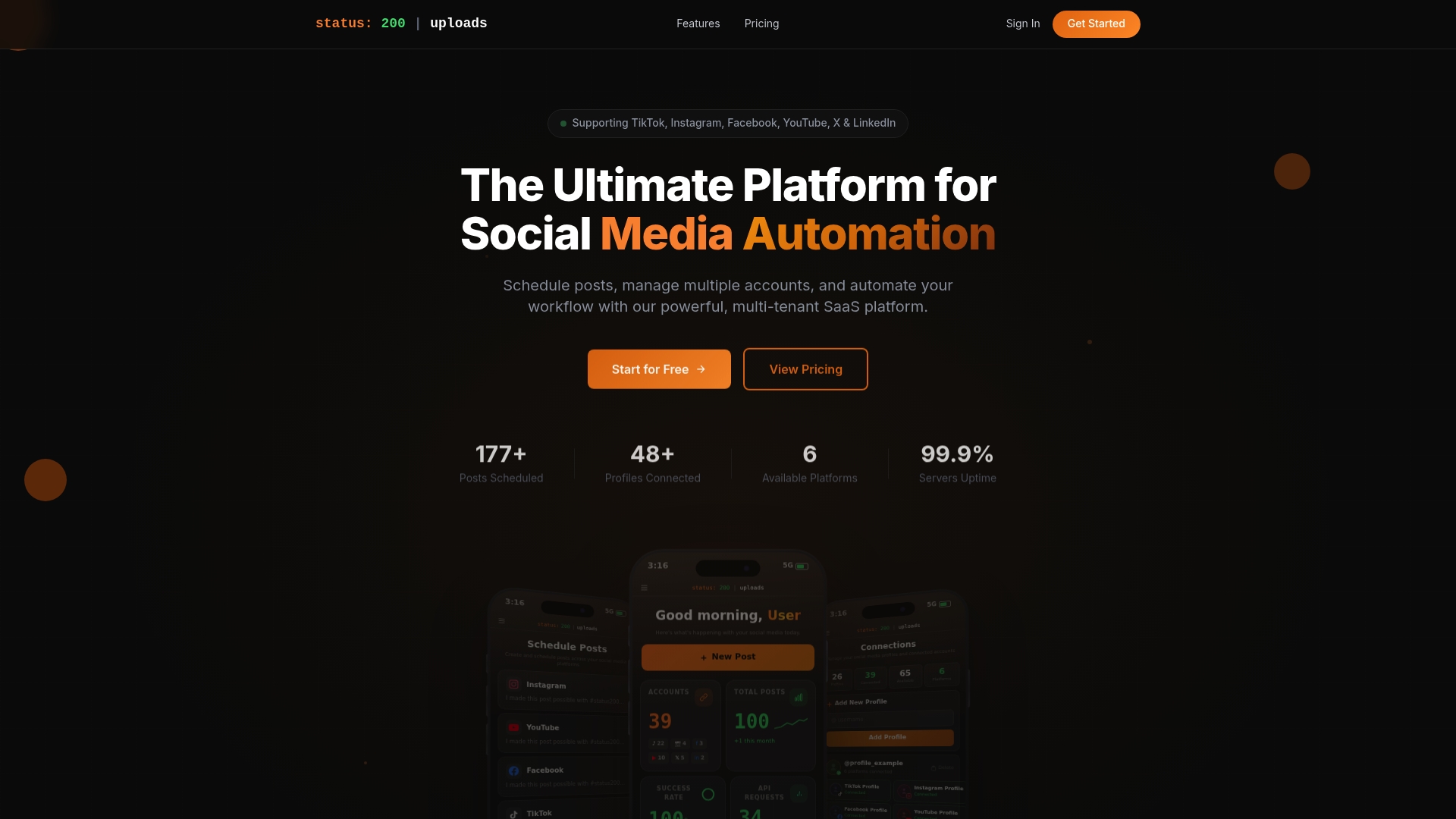
You get detailed post tracking, media organization, and automation via Zapier or Make.com integrations, all designed to help small teams maintain quality and consistency without burning out. Whether you are a solo content manager or running a small agency, you can try it for free and see how much time a centralized publishing workflow saves every week.
Frequently asked questions
What is the best day and time to publish social content?
Midweek days like Tuesday through Thursday between 9am and 5pm tend to perform best, but always validate against your own audience analytics since every niche behaves differently.
How many posts should SMBs publish per week?
B2B benchmarks suggest 11 to 20 blog posts and 51 to 100 social posts per quarter, but quality always matters more than hitting a specific number.
What metrics matter most for content publishing?
Engagement rate, click-through rate, and conversions are the three metrics that most directly reflect whether your content is working. Use median engagement benchmarks as a baseline to measure your performance against industry norms.
How can SMBs balance quality and frequency?
Build a repeatable content workflow that makes production efficient, then protect that quality standard even if it means posting less. Algorithms reward consistency, but engagement rewards relevance.
Is automation or scheduling worth it for small teams?
Absolutely. Scheduling tools let small teams maintain a consistent publishing cadence across multiple platforms without requiring someone to be online at all hours, making them one of the highest-return investments for SMB content operations.
Recommended
- Status 200 Uploads vs Publer — 2026 Comparison
- Status 200 Uploads — Schedule Posts to TikTok, Instagram, FB, YouTube, X & LinkedIn
- Blog — Status 200 Uploads
- Status 200 Uploads vs Sprout Social — 2026 Comparison
- 10 Essential Tips for Amazon Content: Your Ultimate Checklist
- Med spa content ideas to boost client engagement