Best media formats for social: Elevate your brand engagement
Discover the best types of media formats for social to boost engagement. Learn strategies to choose the right format for each platform!

Choosing the wrong media format is one of the fastest ways to tank your content’s reach before anyone even reads your caption. Every platform has its own rules, its own audience habits, and its own algorithm biases, and the brands that win consistently are the ones that treat format selection as a strategic decision, not an afterthought. This article gives you a proven framework for picking the right format, a breakdown of what each format does best, a side-by-side platform comparison, and actionable tips to align your choices with real campaign goals.
Table of Contents
- How to choose the right media format for social platforms
- The essential media formats for boosting social engagement
- Comparing media formats: Which works best for each social platform?
- Tailoring media formats to your brand goals and audience
- Why most brands overlook media format strategy: Our take
- Simplify your social workflow with Status 200 Uploads
- Frequently asked questions
Key Takeaways
| Point | Details |
|---|---|
| Format matters | Choosing the right media format boosts engagement and reach across all platforms. |
| Platform best practices | Each social network has specific dimensions and file sizes for optimal performance. |
| Test and optimize | Regularly split-test different media formats to discover what resonates with your audience. |
| Streamline workflow | Using a scheduling and validation tool ensures your content always meets platform requirements. |
How to choose the right media format for social platforms
Format selection is not about personal preference. It is about matching your content to the technical requirements and behavioral patterns of the platform where it lives. Get this wrong and even great content gets buried.
Here is a practical framework for making smarter format decisions:
-
Start with platform specs. Every platform has preferred dimensions and file size limits. Instagram feed images perform best at 1080x1350 pixels (4:5 ratio), Stories and Reels need a 9:16 ratio at 1080x1920, and LinkedIn posts are optimized at 1200x627. File size matters too: aim for images under 200KB and videos under 50MB for fast loading and consistent quality across devices.
-
Match the format to your message. A product announcement hits harder as a bold single image. A tutorial needs video. A complex stat deserves an infographic. The message itself should guide the format, not the other way around. When you force a message into the wrong format, you create friction between what you are saying and how you are saying it.
-
Think about device and consumption habits. Most social browsing happens on mobile. Vertical formats perform better on phones because they fill the screen naturally. Horizontal formats can work on LinkedIn where desktop usage is higher, but on Instagram or TikTok, vertical is non-negotiable.
-
Compress every file before uploading. Unoptimized files slow down load times and can lose quality after platform recompression. Use tools that preserve sharpness while hitting that sub-200KB target for images. For video format basics, understanding codecs and bitrate targets helps you maintain quality while keeping file sizes manageable.
-
Check your analytics before committing to a format. If your audience consistently skips your video content but saves your carousels, that data is telling you something. Reviewing your max engagement strategies regularly will surface these patterns faster.
Pro Tip: Bookmark each platform’s official creator guide and set a reminder to check it quarterly. Platform specs change more often than most marketers realize, and publishing content at the wrong dimensions can trigger recompression artifacts that make your brand look amateurish.
The essential media formats for boosting social engagement
Understanding what each format does well, and where it falls short, gives you a menu of options rather than a single default. Here is what every social media manager should know about the main contenders:
-
Single images are the workhorse of social content. They load fast, communicate quickly, and are easy to repurpose across platforms. They shine for product launches, motivational quotes, announcements, and brand consistency campaigns. The downside is limited storytelling depth. A single image needs strong visual hierarchy and minimal text to work. Keep image files under 200KB to ensure they load cleanly on all devices without the platform degrading quality through recompression.
-
Videos consistently drive the highest engagement of any format when done right. They are ideal for product demos, behind-the-scenes content, tutorials, and storytelling. Short-form video (under 60 seconds) dominates on TikTok, Instagram Reels, and YouTube Shorts. Longer video still performs on YouTube and LinkedIn when the content has real substance. The investment is higher, but so is the payoff when you match topic to format. Check out content publishing best practices to see how timing and format combine for bigger results.
-
GIFs are underused by professional brands but can be powerful in the right context. They grab attention in fast-moving feeds, add personality to otherwise dry content, and work especially well for humor, reactions, and product micro-animations. The GIF versus video debate comes down to context: GIFs are smaller, loop automatically, and feel casual, while video communicates more depth. For community management and replies, GIFs are gold.
-
Carousels are one of the most underrated formats for serious engagement. Multi-slide posts encourage swipe behavior, which signals strong engagement to algorithms. They work brilliantly for educational threads, step-by-step guides, before-and-after content, and visual portfolios. Each slide functions like a mini-post, so the storytelling arc matters. Start with a hook slide and end with a clear call to action.
-
Infographics package complex information into scannable visuals. They perform especially well on LinkedIn and Pinterest, where audiences expect data and professional insight. For a B2B brand, a well-designed infographic summarizing industry stats or a process breakdown can generate significant shares and saves. These saves matter because they signal to the algorithm that your content has lasting value.
Pro Tip: Do not guess which format your audience prefers. Run a 30-day split test comparing video against carousel for the same topic. Your engagement strategies should evolve based on what the data shows, not what feels right.
Comparing media formats: Which works best for each social platform?
Platform context changes everything. The same piece of content formatted differently can either surge or disappear depending on where it lives. Here is a direct comparison to guide your decisions:
| Platform | Best format | Ideal dimensions | Engagement potential | Notes |
|---|---|---|---|---|
| Reels, carousel, vertical image | 1080x1920 (Reels), 1080x1350 (feed) | Very high | Vertical dominates; Stories for daily touchpoints | |
| TikTok | Short-form video | 1080x1920 (9:16) | Extremely high | Native, raw-feeling video outperforms polished |
| Horizontal image, video, carousel | 1200x627 (image), 1920x1080 (video) | High for B2B | Professional tone; document carousels growing fast | |
| Video, single image, carousel | 1200x628 (image), 1280x720 (video) | Moderate | Algorithm favors video; groups amplify reach | |
| YouTube | Long-form video, Shorts | 1920x1080 (standard), 1080x1920 (Shorts) | High | Searchability is a major advantage over other platforms |
| X (Twitter) | Short video, GIF, single image | 1200x675 (image), up to 512MB (video) | Moderate | Text-forward; visuals supplement rather than lead |
For platform-specific engagement tips, the key insight is that each platform rewards native content. TikTok punishes anything that looks like it was exported from a different platform, including visible watermarks. Instagram’s algorithm currently pushes Reels harder than static posts. LinkedIn’s algorithm prioritizes content that keeps users on the platform, which means documents and carousels earn more distribution than outbound links.
Format optimization is not just about aesthetics. It is about algorithmic alignment. Platforms promote content that fits their design intent, and they suppress content that does not.
For top video types that consistently perform across platforms, short tutorials, authentic stories, and product walkthroughs lead the pack regardless of platform. The key takeaway from streamline multi-platform posting workflows is that you do not need entirely separate content for each platform. You need platform-adapted versions of the same core content. Shoot in vertical, crop a horizontal version for YouTube or LinkedIn, and you have maximized your production effort.
Managing all of this manually across six platforms is where most small and medium brands lose ground. Tools that support multi-platform engagement tips through smart scheduling and format management are what separate reactive posting from a real content strategy.
Tailoring media formats to your brand goals and audience
Once you know the format options and platform requirements, the final step is connecting format to your actual campaign goals. This is where most brands stall. They know the rules but forget to apply them purposefully.
Here is how to align format with goal:
-
Awareness campaigns benefit from high-visual, low-text formats. Bold single images and short video clips (15 seconds or less) make instant impressions without demanding attention. The goal here is recognition, not conversion, so do not overload these with information.
-
Engagement campaigns thrive on carousels and educational videos. When you want comments, saves, and shares, give people something worth interacting with. A carousel that teaches a skill or a video that answers a common question invites participation naturally.
-
Conversion campaigns need clarity above everything else. A clear product image or a demo video with a strong call to action outperforms creative experimentation when the goal is a click or a purchase. Use reach optimization strategies to amplify your highest-converting format combinations.
-
Audience demographics matter more than most brands admit. Younger audiences on TikTok and Instagram respond to casual, authentic video. Professional audiences on LinkedIn expect polished visuals and data-backed content. If your brand spans multiple demographics, you likely need separate format strategies per platform, not a one-size-fits-all approach.
-
Seasonal and campaign timing shifts what works. During high-volume periods like product launches or holidays, short punchy video and animated content cut through the noise better than static images. During evergreen content periods, infographics and carousels have longer shelf lives and keep driving saves weeks after publishing.
Pro Tip: When you automate posting times through a scheduler, you free up time to actually analyze format performance rather than scrambling to post manually every day. Use that time to run format-specific A/B tests at least once per quarter.
Audience device data from your platform analytics can also guide format decisions. If 85% of your Instagram audience is on mobile, vertical formats are not optional; they are essential. Looking at video management tips for organizing and tagging your content library also speeds up the process of repurposing across formats without rebuilding from scratch each time.

Why most brands overlook media format strategy: Our take
Here is something we notice constantly: brands spend weeks on creative direction, copywriting, and campaign strategy, then publish at the wrong aspect ratio on the wrong platform and wonder why results fall flat. Format optimization is treated like a technical checkbox rather than a strategic lever, and that is a costly mistake.
The reality is that format changes require almost no creative effort but deliver outsized results. Resizing a video from 16:9 to 9:16 for Instagram Reels is a 10-minute task. Getting that ratio right can double your view rate compared to a letterboxed video that feels out of place in the feed. The algorithm responds, the audience responds, and suddenly the content you already invested in starts working harder.
We have seen this play out in real-world campaigns where a single adjustment, matching the aspect ratio and compressing the file to spec, lifted engagement rates by 30 to 40 percent without changing a single word of copy or a single visual element. That is the power of treating format as a first-class strategic decision.
The other gap we see is in review cycles. Most teams review copy and creative regularly but never audit their format choices. Building a quarterly format review into your workflow optimization process forces that audit to happen. You compare what formats you used against which ones performed, adjust your defaults, and start the next quarter sharper.
Organized video libraries also matter more than brands think. When your media assets are properly tagged by format, platform, and campaign, repurposing becomes fast and systematic. You can pull the vertical version of last quarter’s top video and repost it to a new platform in minutes rather than hunting through folders for the right file.
Format strategy is not glamorous work. It will never win a creative award. But it is the foundation that determines whether your content reaches people or disappears.
Simplify your social workflow with Status 200 Uploads
Managing format requirements across six platforms while keeping your content calendar moving is a real operational challenge for small and medium teams. That is exactly what Status 200 Uploads was built to solve.
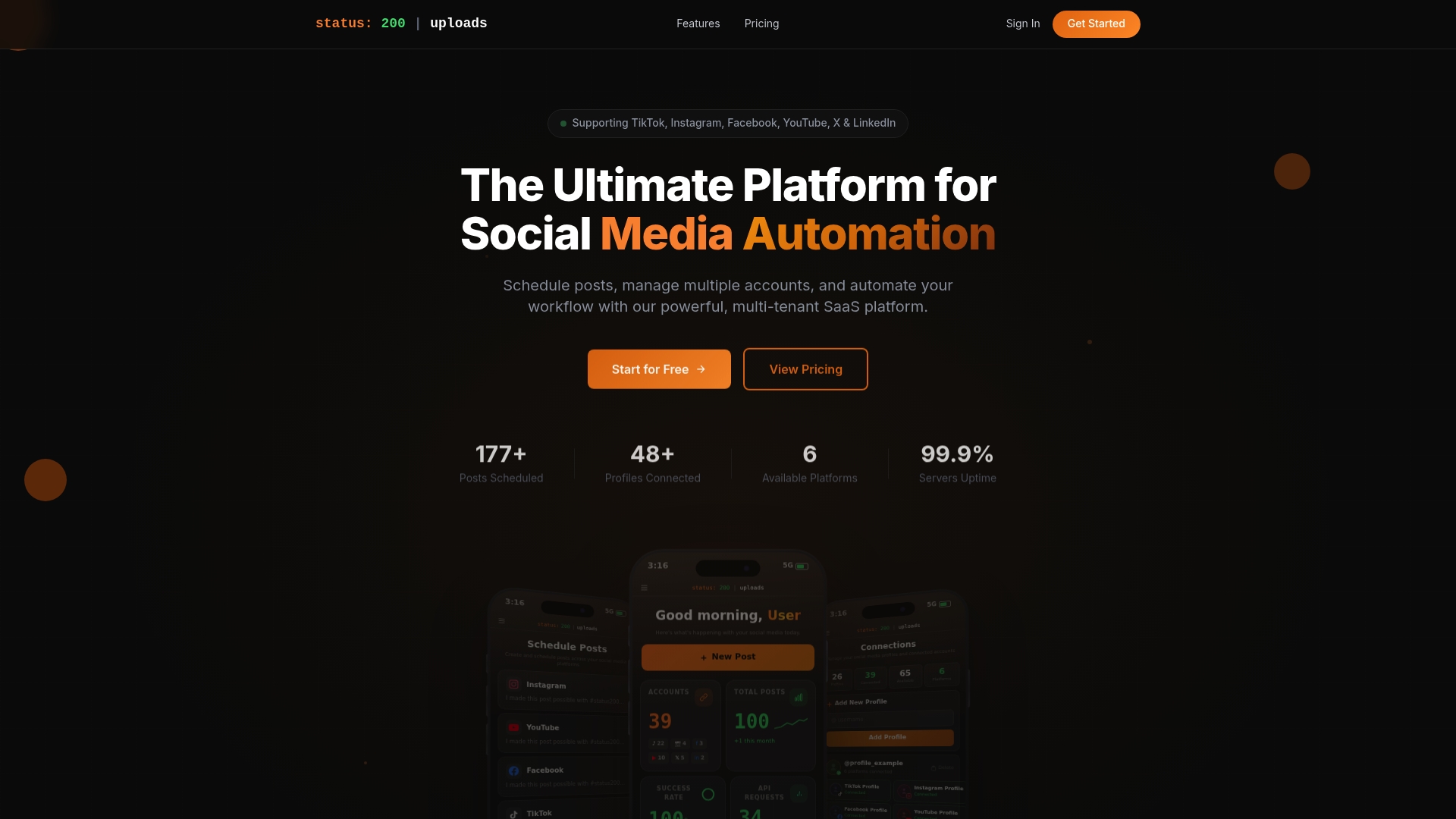
With Status 200 Uploads, you connect all your social accounts through a single dashboard and schedule posts to TikTok, Instagram, Facebook, YouTube, X, and LinkedIn simultaneously. The platform gives you control over platform-specific post settings so your content always reaches each audience in the right format. Detailed post tracking lets you measure what formats are actually driving engagement, so your strategy improves every month rather than repeating the same guesses. If you use Zapier or Make.com, the API integrations make your content workflow almost entirely automated, freeing your team to focus on strategy and creative rather than manual publishing tasks.
Frequently asked questions
What are the top media formats to use for Instagram in 2026?
Vertical images at 1080x1350 for feed, Stories and Reels at 1080x1920 (9:16), and video files under 50MB are the strongest performing formats on Instagram right now.
How can I ensure videos upload quickly and play smoothly on social platforms?
Keep your video files under 50MB, match the recommended dimensions for each platform, and use a compression tool before uploading to avoid quality loss from platform-side recompression.
Which media format gets the best engagement on LinkedIn?
Images at 1200x627 pixels and document carousels consistently perform well on LinkedIn, with short professional videos gaining ground as the platform’s video feed grows in 2026.
What file sizes should I target for social media images?
Target images under 200KB across all major platforms to ensure fast load times and prevent the platform from applying heavy compression that degrades visual quality.