Top social media trends to elevate your 2026 strategy
Discover the top 2026 social media trends to enhance your strategy and stay ahead of competitors. Adapt and thrive with our expert insights!

The strategies that drove results in 2024 are already showing their age. Platforms have restructured their algorithms, audiences have migrated to new spaces, and the definition of “good content” has shifted underneath many marketers’ feet. If you’re still running the same playbook, you’re not just standing still — you’re falling behind. This guide breaks down the most important social media shifts heading into 2026, so you can make confident decisions about where to invest your time, creativity, and budget before your competitors do.
Table of Contents
- Emerging platforms and the shifting network landscape
- Key content formats and feature innovations
- Automation, analytics, and smarter workflows
- Community, micro-influencers, and trust signals
- Our perspective: Rethinking consistency and agility on social in 2026
- Upgrade your social strategy with the right tools
- Frequently asked questions
Key Takeaways
| Point | Details |
|---|---|
| New networks rising | Emerging platforms and shifting user habits are changing where brands must focus. |
| Content types evolve | Short video, interactive features, and AI tools are now essential for engagement. |
| Automate for scale | Efficient workflows rely on smart automation and advanced analytics in 2026. |
| Community drives trust | Engaged communities and micro-influencers are central to influencing consumer decisions. |
Emerging platforms and the shifting network landscape
The social media map looks noticeably different in 2026. While Instagram, TikTok, YouTube, and LinkedIn still command massive audiences, the platforms gaining momentum now are reshaping how creators and brands think about distribution.
New entrants are leaning hard into niche communities, immersive formats, and decentralized models. Think interest-based platforms built around passion verticals — cooking, gaming, finance, wellness — where algorithm-driven discovery is replaced by genuine community interest. These aren’t replacements for the big networks yet, but they are early investment opportunities that forward-thinking marketers shouldn’t ignore.
Audience demographic shifts are accelerating too. Gen Z continues to fragment across platforms rather than concentrating on one, while Millennials are doubling down on content-rich platforms like YouTube and LinkedIn for professional and educational content. Meanwhile, older demographics are increasingly active on Facebook and Instagram, making those platforms still relevant for B2C brands with broader age targets.
Here’s a snapshot of how platform priorities are stacking up for marketers this year:
| Platform | Primary audience | Content priority | Marketer opportunity |
|---|---|---|---|
| TikTok | Gen Z, Millennials | Short-form video | Discovery and virality |
| Millennials, Gen Z | Reels, Stories, carousels | Brand aesthetics, shopping | |
| YouTube | All ages | Long-form, Shorts | Authority building, SEO |
| Professionals 25-45 | Thought leadership, video | B2B lead generation | |
| Emerging niche platforms | Specific interest groups | Community and immersive content | Early-mover brand affinity |
Choosing where to show up isn’t just about follower counts anymore. The smartest move is evaluating platforms through three filters: audience overlap with your target customer, content format alignment with your production strengths, and the platform’s trajectory. A platform growing at 40% year-over-year with your audience demographic is worth more attention than a flat giant where organic reach is throttled.
Key questions to guide your platform evaluation:
- Does your target audience actively use this platform, or just passively scroll?
- Can your existing content be adapted here without a full production overhaul?
- Are early-mover creators still getting organic amplification, or is paid required to break through?
- Is this platform growing its advertiser tools, signaling long-term commercial intent?
Exploring platforms for SMB success is a useful exercise whether you’re a solo creator or managing content for a growing brand. The platforms worth pursuing are rarely the ones with the most buzz — they’re the ones where your specific audience is most engaged and underserved.
Key content formats and feature innovations
With network choices clarified, it’s essential to build on the newest content formats and platform innovations that are actually moving engagement numbers right now.
Short-form video is still king, but the definition of “short” has evolved. What started as 15-second clips has expanded into a sweet spot of 45 to 90 seconds, where creators can deliver real value without losing the snappy pace audiences expect. The data on engagement trends consistently shows that this format dominates across TikTok, Instagram Reels, and YouTube Shorts, especially for discovery-phase content.
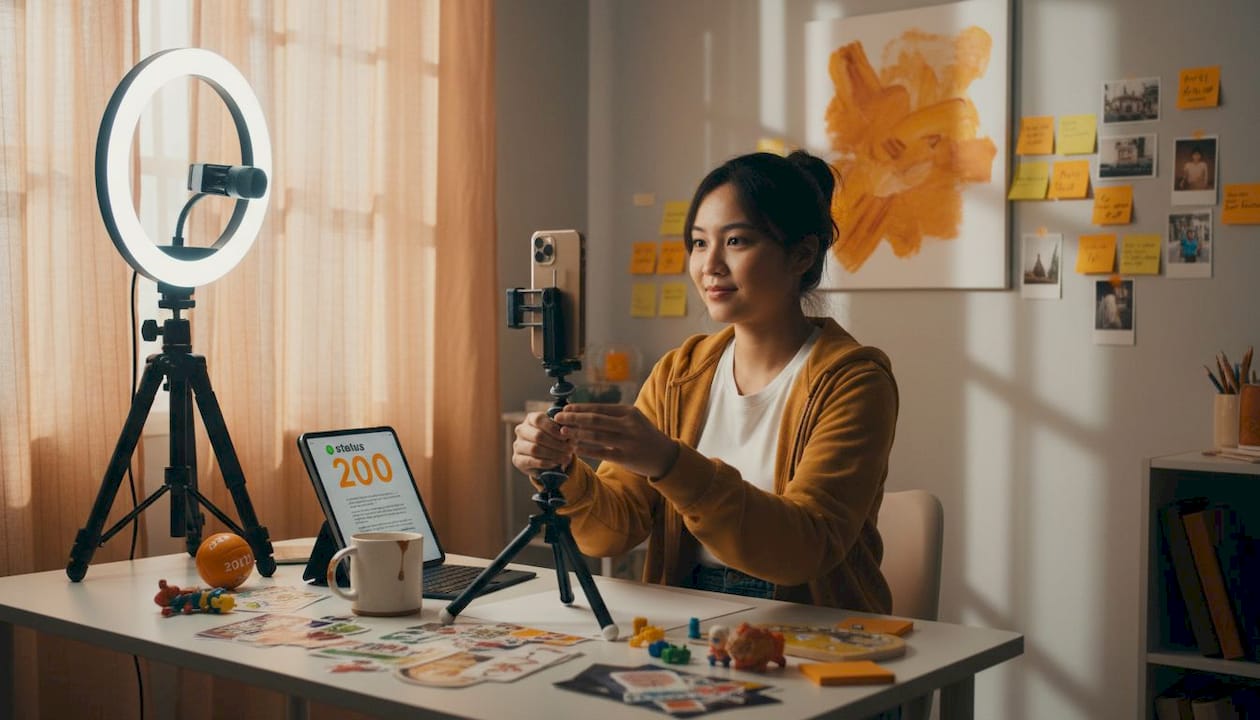
Live streaming is having a serious second wave. Unlike the early live-video era of raw, unscripted broadcasts, today’s live content leans into structured formats: product launches, Q&A sessions, panel discussions, and real-time tutorials. Platforms are rewarding live content with priority placement, and audiences have come to expect a certain level of production quality even in live formats.
AI-powered content tools have gone from experimental to essential. Automated caption generation, AI-assisted script writing, smart clip selection from long-form video, and personalized content recommendations are now baked into most major platforms. For marketers, this is a double-edged feature: it lowers the barrier to entry for competitors but also gives power users serious efficiency gains.
Here’s how the top content formats compare on key performance metrics:
| Format | Avg. engagement rate | Best for | Effort level |
|---|---|---|---|
| Short-form video (45-90s) | High | Discovery, awareness | Medium |
| Live streaming | Very high (in-moment) | Community, conversion | High |
| Carousels/swipe posts | Medium-high | Education, saves | Low-medium |
| Stories/ephemeral content | Medium | Retention, daily touchpoints | Low |
| Long-form video | Medium (high completion) | Authority, SEO | High |
How to actually leverage new features without overwhelming your team:
- Identify one new format per quarter to test deliberately, rather than chasing every update.
- Repurpose existing content first — a blog post becomes a carousel, a webinar becomes short clips.
- Use AI captioning and script tools to cut production time, not to replace your creative voice.
- Set a 30-day evaluation window for new formats before scaling or dropping them.
- Track not just likes but saves, shares, and click-throughs as signals of deeper engagement.
Pro Tip: Before adopting any new platform feature, ask yourself if your audience is actually using it or if it’s just platform-side hype. Features get rolled out globally but adoption curves vary wildly by niche.
Optimizing your TikTok scheduling workflow is one concrete place where format strategy meets execution. Posting cadence on short-form platforms matters as much as content quality — consistency signals to algorithms that you’re an active, reliable creator.
Automation, analytics, and smarter workflows
After innovating with content, efficiency and data clarity are your multipliers. Let’s see how automation and analytics lead the next wave of social media management.
Social media automation has matured well beyond basic scheduling. In 2026, smart automation handles content queuing across time zones, auto-responds to common engagement triggers, recycles high-performing evergreen content, and feeds data back into your planning cycle automatically. The brands seeing the biggest returns aren’t working harder — they’re running tighter systems.
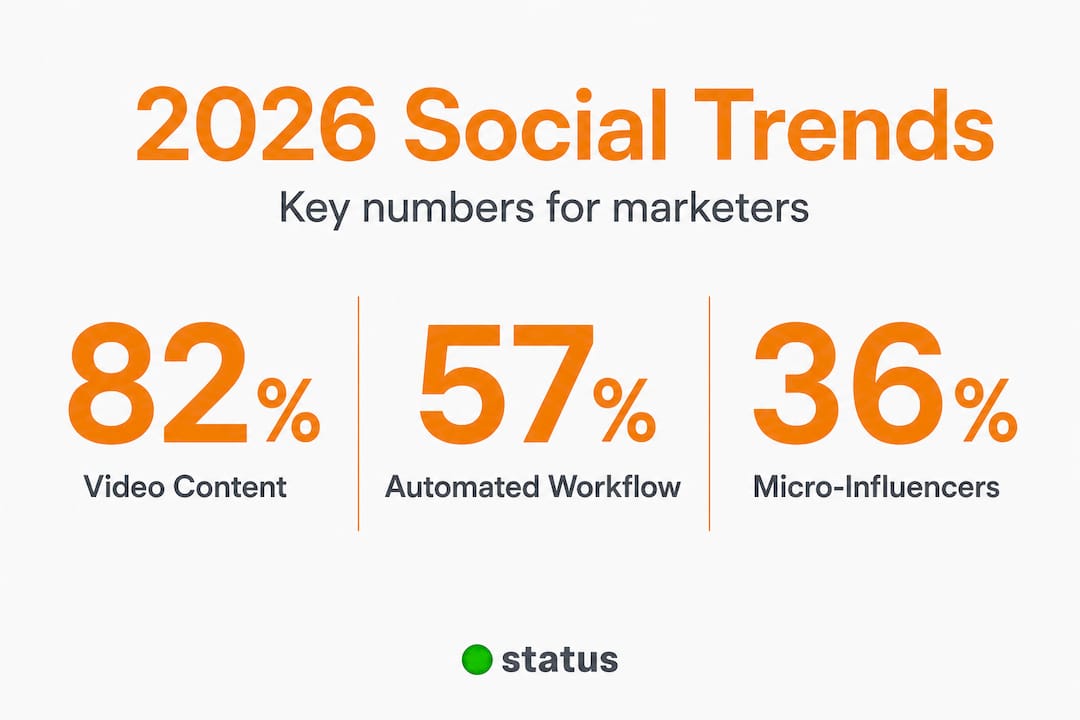
That said, automation has real limits. Audiences can feel when engagement is robotic. Auto-replies that miss context, generic comment responses, and tone-deaf re-posts can erode trust faster than inconsistency alone. The goal is to automate the operational layer, not the relational layer.
Key benefits of automation for social teams in 2026:
- Time recovery: Eliminating manual posting across six platforms can save 8 to 12 hours per week for an average-sized content team.
- Consistency: Scheduled queues prevent the “posting gaps” that hurt algorithmic reach.
- Multi-platform coordination: Simultaneous publishing lets you maintain brand voice across channels without doubling workload.
- Data capture: Automated tracking pulls performance metrics in real-time, giving you faster feedback loops.
- Workflow integration: API connections to tools like Zapier or Make.com mean your social stack talks to your CRM, email platform, and analytics suite.
Smart analytics go beyond vanity metrics. Reach and impressions tell you about exposure, but conversion paths, audience retention curves, post-save rates, and engagement velocity tell you whether content is actually working. Building a social media calendar that is informed by these deeper metrics means you’re not just planning content — you’re planning outcomes.
“The marketers winning in 2026 are not the ones posting the most — they’re the ones with the clearest feedback loop between what they publish and what it produces.”
Common workflow mistakes to actively avoid:
- Treating automation as a “set it and forget it” system without regular audits.
- Publishing identical copy across platforms without adapting tone for each network’s culture.
- Ignoring dark social (direct messages and private shares) where real conversion often happens.
- Measuring success weekly instead of building 60 to 90-day trend views that show actual growth arcs.
Pro Tip: Run a monthly “content audit sprint” where you pull your top five and bottom five posts, identify the pattern separating them, and adjust your next month’s plan accordingly. This 30-minute exercise is worth more than any dashboard subscription.
Community, micro-influencers, and trust signals
With automation in hand, fostering community and trust becomes the foundation of real engagement. The algorithms of 2026 reward content that generates conversation, not just consumption.
Community-led growth is the model replacing the old broadcast approach. Instead of talking at your audience, the most effective brands in 2026 are building spaces where audiences talk with each other and with the brand. This could be a Facebook Group, a Discord server, a LinkedIn community, a Reddit presence, or even a dedicated comments strategy that turns followers into active participants.
Micro-influencers — creators with audiences typically between 10,000 and 100,000 — continue to outperform mega-influencers on engagement rate and authenticity. A creator with 25,000 highly engaged followers in a specific niche can deliver more qualified attention than a celebrity with 5 million passive ones. Audience trust is the currency, and micro-influencers have earned it through consistent, specific content.
This trust factor is backed by real numbers: brands using micro-influencer partnerships report higher conversion rates than traditional influencer campaigns, largely because niche audiences take product recommendations more seriously from creators they feel genuinely know them.
Trust signals shaping 2026 consumer decisions:
- User-generated content (UGC): Real customers using and reviewing your product carry more weight than polished brand ads.
- Social proof through community activity: Active comment sections, shared experiences, and peer recommendations signal credibility.
- Creator consistency: Brands that show up regularly with a coherent voice are trusted more than those who post in bursts.
- Transparent partnerships: Clearly disclosed brand deals actually increase trust when the creator’s genuine enthusiasm is evident.
- Response rate: Brands that reply to comments and messages build a reputation for caring, which is increasingly rare and valuable.
Building a strong multi-account strategy lets you maintain those community touchpoints across platforms without losing consistency. The key is not replicating the exact same content everywhere, but adapting your brand voice to fit each platform’s culture while keeping the underlying message coherent.
Our perspective: Rethinking consistency and agility on social in 2026
Here’s something the trend roundups rarely say out loud: chasing every new platform feature or emerging network is one of the fastest ways to dilute your brand and burn out your team.
The marketers who will look back at 2026 as a breakthrough year are not the ones who adopted every tool and tested every trend. They’re the ones who got disciplined about filtering what actually matters for their specific audience versus what’s just industry noise. There’s always a new feature to test, a new network to join, a new format to master. That constant pressure to “stay current” can push you into a reactive mode where you’re never building anything with lasting depth.
Real agility isn’t about moving fast on everything. It’s about having a system solid enough that you can pivot quickly when something genuinely relevant to your audience emerges — and ignore everything else without anxiety. The brands with that operational foundation in place are the ones who consistently outpace competitors, not because they were first on every trend, but because they were excellent at execution when it counted.
The competitive edge in 2026 isn’t novelty. It’s process. Brands that invest in tightening their advanced media management workflows, building strong community relationships, and making data-informed decisions on a consistent cadence will beat the reactive trend-chasers every single time. Trends come and go. A well-engineered content operation compounds over time.
Upgrade your social strategy with the right tools
Knowing the trends is only half the work — execution is where the gap between strategy and results actually closes. If you’re managing content across TikTok, Instagram, Facebook, YouTube, X, and LinkedIn, the operational overhead of manual posting, tracking, and adapting can absorb the creative energy you actually need for growth.
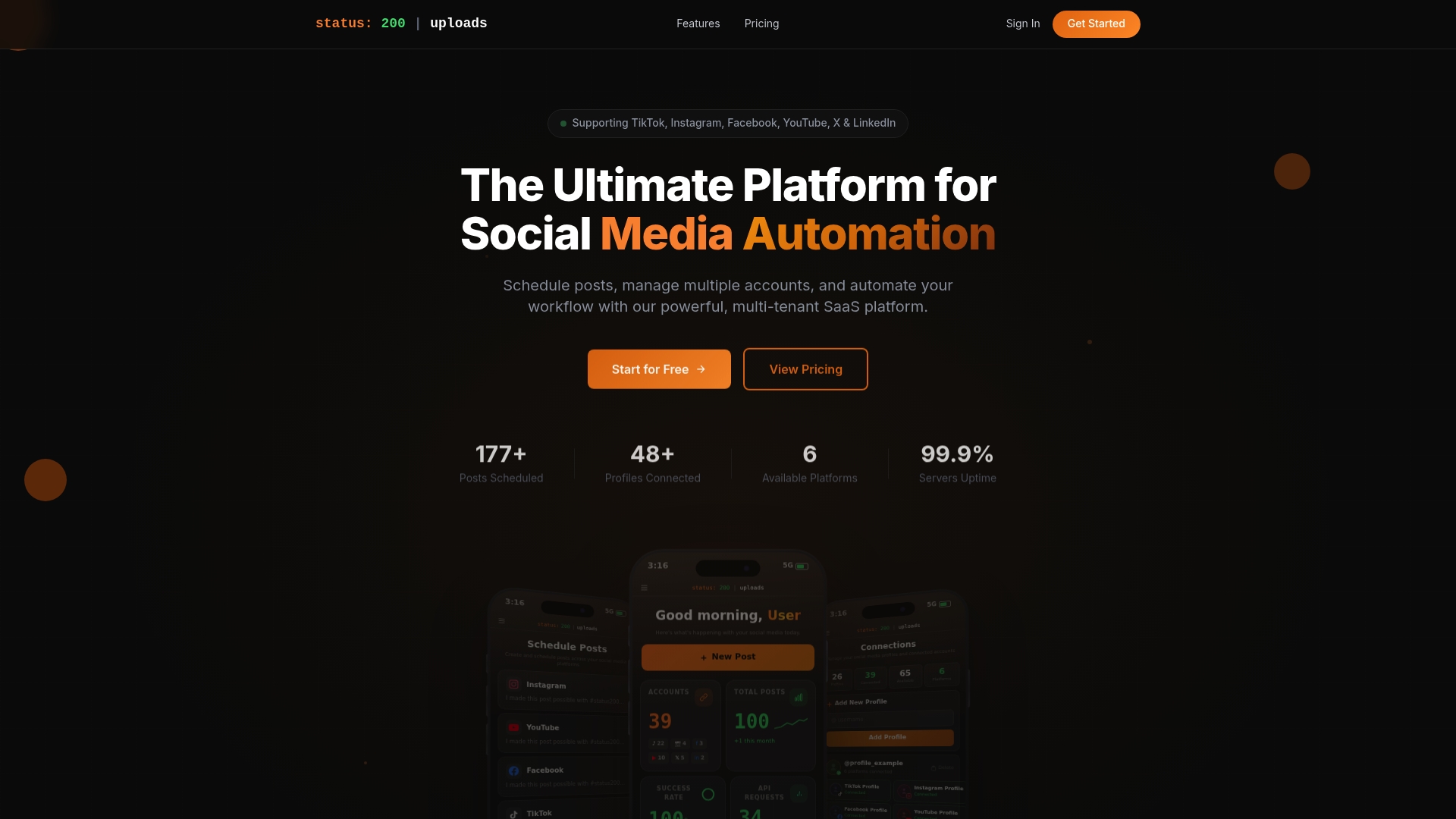
Status 200 Uploads brings all of your platform management into a single dashboard, letting you schedule and publish to every major network simultaneously, track performance in real-time, and build automation workflows that free you up to focus on what matters. Whether you’re testing a new short-form video strategy, scaling a micro-influencer campaign, or maintaining a consistent posting cadence across six platforms, the right infrastructure makes it all dramatically more manageable. Stop spending your best hours on logistics and start spending them on the creative work that actually grows your audience.
Frequently asked questions
What are the new social media platforms to watch in 2026?
The newest platforms gaining traction in 2026 focus on immersive content formats and niche community structures, positioning themselves as alternatives to algorithm-heavy legacy networks where organic reach has significantly declined.
How important is automation for social media marketing in 2026?
Automation is now a baseline requirement for anyone managing a multi-platform presence — social media automation handles the operational layer so marketers can redirect energy toward strategy, creativity, and genuine community engagement.
What content formats get the highest engagement in 2026?
Short-form video in the 45 to 90-second range, interactive live streams, and AI-enhanced content experiences are consistently driving the highest engagement across both established platforms and newer entrants in 2026.
How have micro-influencers changed brand marketing?
Micro-influencers have shifted the focus from reach to relevance, giving brands access to highly engaged niche audiences where trust is higher and conversion rates consistently outperform traditional large-scale influencer campaigns.